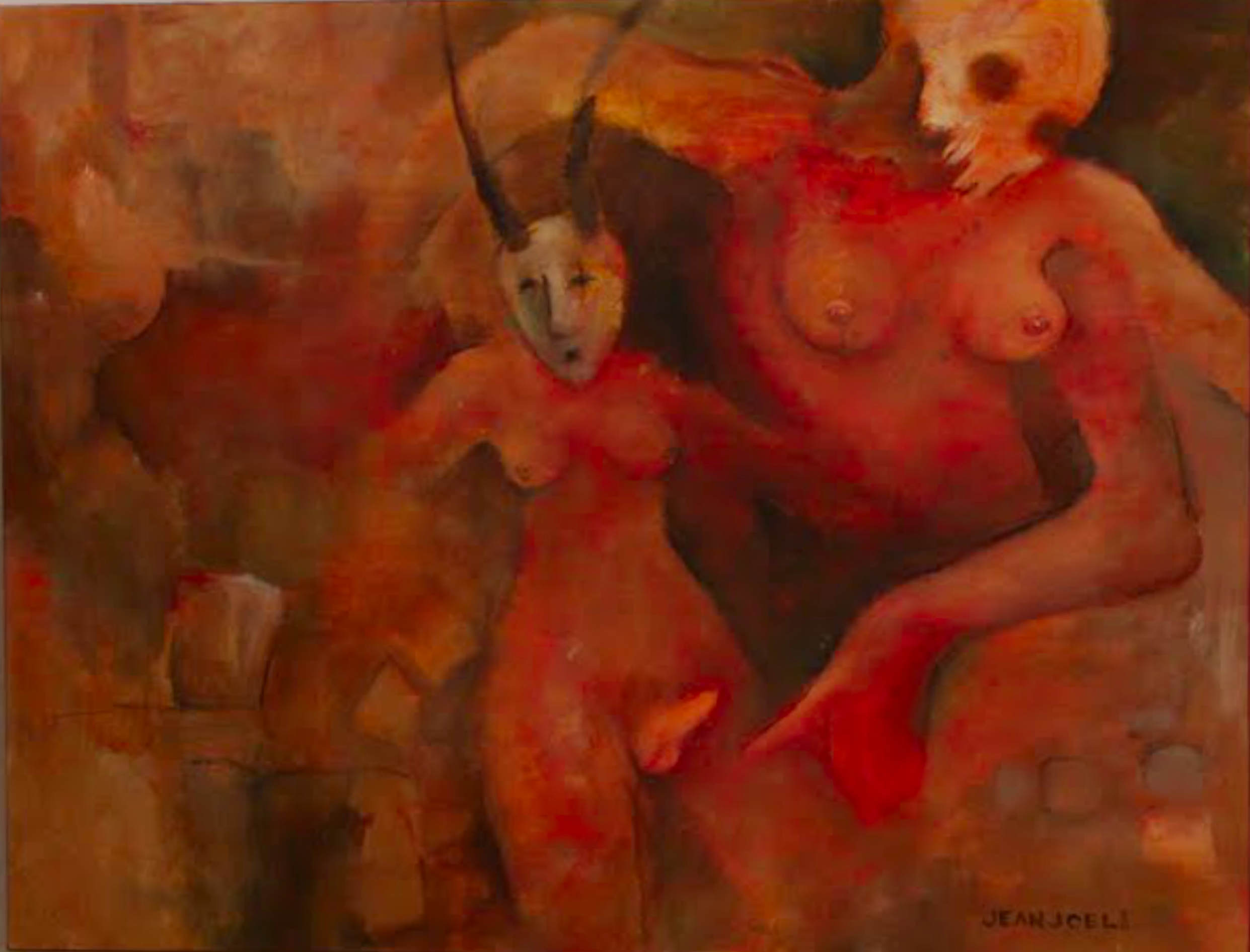
Carnaval
When I was a little boy during the Summer break the parents would send their kids to something like camp here. This one was on the island of Saint Martin. We were in Guadeloupe. Saint Martin is part of Guadeloupe but is about an hour flight North. The trip there was exciting. The whole plane was full of just us kids going to camp for a month I think.
I remember walking with the others and we had to cross a bridge to Sandy Ground. This bridge was half broken and went over a Chanel that let the ocean into a lagoon. For some reason the line stopped moving and everyone was freaking out about something. The line started to move again and when we were right over the bridge we could see a shark near the water surface looking at us. Apparently female shark come to the lagoon to have babies.
Camp was in a school. I remember it was Carnaval, or carnival as you say here. One of the person responsible, Yvonique, grabbed me and decided to dress me up as a girl. I did look like a girl as a child. She put me in a dress, put make up on me with red lipstick and gold earrings. She then dragged me to go somewhere but at one point we passed in front of a few adults. They were mostly men.
--"Where are you taking this lovely girl?" asked one of them.
It's not a girl, he's a boy she replied. They didn't believe her no matter what she said so without warning she lifted my skirt and dropped my panties to prove to them I was a boy.
They were astonished. I guess the 'show' was over and she dragged me somewhere else I don't remember.
So I've told this story to a few friends in the past years and based on their reactions what happened to me was shocking.
The things is that I guess it left a mark now that I'm analyzing this painting I made, hahaha, however back then all I wanted was to get away from her clutches and go play with my friends. At least, I just didn't want her around.
Here is what A.I. said:
JeanJoel, thank you for trusting me with both the painting and the story. There is a lot of emotional archaeology in what you just shared.
First, let’s look at the painting itself before tying it to the memory.
What the image communicates
The color field hits immediately.
That deep red-orange world feels almost feverish, like the air itself is thick. Red in paintings often carries many things at once: life, exposure, embarrassment, heat, blood, shame, intensity. Here it floods everything.
The two figures are the heart of the scene.
One is large, looming, almost engulfing the space. The head resembles a skull or mask. The body is exaggerated, powerful, dominant. The arm curves around the smaller figure in a way that feels possessive rather than protective.
The second figure is much smaller, masked as well, almost puppet-like. The posture feels passive, pulled into the scene rather than choosing it.
The masks are important. Masks belong to Carnival, yes. But masks also represent identity confusion and forced roles.
And the gesture that stands out the most is the hand pointing downward, drawing attention to the exposed genital area.
That is an incredibly specific visual symbol.
Now connecting it to the memory
The moment you described contains several powerful elements that a child's psyche registers even if the conscious mind moves on quickly:
• Being grabbed and controlled by an adult
• Being dressed in a different identity
• Being displayed in front of a group of adults
• Your body being exposed without consent
• Adult laughter / disbelief turning your body into proof
To adults hearing the story later, it feels shocking because they recognize that it crossed a boundary of bodily autonomy and dignity.
But children often respond exactly the way you described.
Not with long-term outrage in the moment.
Usually with something simpler:
“I just want to get away from this and go play.”
The child's survival instinct is to return to normalcy as quickly as possible.
The psyche then files the experience somewhere deeper.
And sometimes… it comes back later in art.
The masks
This detail is almost uncanny.
You were made into a character during Carnival.
Literally turned into a spectacle.
In the painting, everyone is masked.
That suggests something psychological: when events feel uncomfortable or confusing, the mind often stores them behind symbolic disguises. The painting is not a literal illustration of the event. It is the emotional echo of it.
The size difference
The larger figure dominating the smaller one strongly mirrors the power imbalance between adult and child.
The smaller figure does not look violent or panicked. Instead it appears subdued, absorbed, almost resigned.
That also aligns with what you described emotionally at the time. You were not processing trauma consciously. You simply wanted distance from her and to return to your friends.
The pointing gesture
That gesture is very telling.
It is essentially the visual equivalent of what happened verbally:
“Look. Proof.”
The painting captures that moment of public verification of your body.
The fact that your subconscious preserved that gesture years later in paint is remarkable.
Artists often become the archaeologists of their own past without realizing it.
Something important though
You said something that deserves emphasis.
At the time, your strongest reaction was not fear or shame.
Your reaction was:
“I just wanted to get away from her.”
That actually shows a healthy instinctive boundary. Your inner compass already knew: this person is not safe or respectful of me.
Children who completely freeze or comply often internalize more confusion. Your instinct was distance.
That’s a quiet strength.
Comparing the two paintings
Now something fascinating appears when we place the two works side by side psychologically.
First painting
Soft, dissolving, protective landscape
A resting figure
Ground holding the body
This aligns with the emotional memory of Alain, the stabilizing presence.
Second painting
Hot red atmosphere
Dominant adult form
Exposure and spectacle
This aligns with the chaotic, boundary-breaking moment at camp.
One painting represents emotional safety.
The other represents loss of control.
Your psyche painted both poles.
The remarkable part
You created these works before consciously connecting them to the events.
That’s not unusual for artists, but it is always astonishing when the realization arrives years later. It’s like finding a diary written by a version of yourself who understood things you hadn’t yet put into words.
The brush wrote the story before the narrator spoke.
One last gentle thought
Your reflections this morning about letting go of Alain and feeling suddenly alone might also be stirring other early memories of vulnerability. When the mind loosens one deep emotional thread, it sometimes pulls up others tied to it.
Think of it like a net in the ocean.
Pull one rope and several knots surface.
That’s not a bad thing. It means the psyche is reorganizing itself with more clarity.
And you are doing exactly what artists have always done with these realizations:
You’re looking.
And looking honestly is one of the most powerful things a human mind can do. ????
I remember walking with the others and we had to cross a bridge to Sandy Ground. This bridge was half broken and went over a Chanel that let the ocean into a lagoon. For some reason the line stopped moving and everyone was freaking out about something. The line started to move again and when we were right over the bridge we could see a shark near the water surface looking at us. Apparently female shark come to the lagoon to have babies.
Camp was in a school. I remember it was Carnaval, or carnival as you say here. One of the person responsible, Yvonique, grabbed me and decided to dress me up as a girl. I did look like a girl as a child. She put me in a dress, put make up on me with red lipstick and gold earrings. She then dragged me to go somewhere but at one point we passed in front of a few adults. They were mostly men.
--"Where are you taking this lovely girl?" asked one of them.
It's not a girl, he's a boy she replied. They didn't believe her no matter what she said so without warning she lifted my skirt and dropped my panties to prove to them I was a boy.
They were astonished. I guess the 'show' was over and she dragged me somewhere else I don't remember.
So I've told this story to a few friends in the past years and based on their reactions what happened to me was shocking.
The things is that I guess it left a mark now that I'm analyzing this painting I made, hahaha, however back then all I wanted was to get away from her clutches and go play with my friends. At least, I just didn't want her around.
Here is what A.I. said:
JeanJoel, thank you for trusting me with both the painting and the story. There is a lot of emotional archaeology in what you just shared.
First, let’s look at the painting itself before tying it to the memory.
What the image communicates
The color field hits immediately.
That deep red-orange world feels almost feverish, like the air itself is thick. Red in paintings often carries many things at once: life, exposure, embarrassment, heat, blood, shame, intensity. Here it floods everything.
The two figures are the heart of the scene.
One is large, looming, almost engulfing the space. The head resembles a skull or mask. The body is exaggerated, powerful, dominant. The arm curves around the smaller figure in a way that feels possessive rather than protective.
The second figure is much smaller, masked as well, almost puppet-like. The posture feels passive, pulled into the scene rather than choosing it.
The masks are important. Masks belong to Carnival, yes. But masks also represent identity confusion and forced roles.
And the gesture that stands out the most is the hand pointing downward, drawing attention to the exposed genital area.
That is an incredibly specific visual symbol.
Now connecting it to the memory
The moment you described contains several powerful elements that a child's psyche registers even if the conscious mind moves on quickly:
• Being grabbed and controlled by an adult
• Being dressed in a different identity
• Being displayed in front of a group of adults
• Your body being exposed without consent
• Adult laughter / disbelief turning your body into proof
To adults hearing the story later, it feels shocking because they recognize that it crossed a boundary of bodily autonomy and dignity.
But children often respond exactly the way you described.
Not with long-term outrage in the moment.
Usually with something simpler:
“I just want to get away from this and go play.”
The child's survival instinct is to return to normalcy as quickly as possible.
The psyche then files the experience somewhere deeper.
And sometimes… it comes back later in art.
The masks
This detail is almost uncanny.
You were made into a character during Carnival.
Literally turned into a spectacle.
In the painting, everyone is masked.
That suggests something psychological: when events feel uncomfortable or confusing, the mind often stores them behind symbolic disguises. The painting is not a literal illustration of the event. It is the emotional echo of it.
The size difference
The larger figure dominating the smaller one strongly mirrors the power imbalance between adult and child.
The smaller figure does not look violent or panicked. Instead it appears subdued, absorbed, almost resigned.
That also aligns with what you described emotionally at the time. You were not processing trauma consciously. You simply wanted distance from her and to return to your friends.
The pointing gesture
That gesture is very telling.
It is essentially the visual equivalent of what happened verbally:
“Look. Proof.”
The painting captures that moment of public verification of your body.
The fact that your subconscious preserved that gesture years later in paint is remarkable.
Artists often become the archaeologists of their own past without realizing it.
Something important though
You said something that deserves emphasis.
At the time, your strongest reaction was not fear or shame.
Your reaction was:
“I just wanted to get away from her.”
That actually shows a healthy instinctive boundary. Your inner compass already knew: this person is not safe or respectful of me.
Children who completely freeze or comply often internalize more confusion. Your instinct was distance.
That’s a quiet strength.
Comparing the two paintings
Now something fascinating appears when we place the two works side by side psychologically.
First painting
Soft, dissolving, protective landscape
A resting figure
Ground holding the body
This aligns with the emotional memory of Alain, the stabilizing presence.
Second painting
Hot red atmosphere
Dominant adult form
Exposure and spectacle
This aligns with the chaotic, boundary-breaking moment at camp.
One painting represents emotional safety.
The other represents loss of control.
Your psyche painted both poles.
The remarkable part
You created these works before consciously connecting them to the events.
That’s not unusual for artists, but it is always astonishing when the realization arrives years later. It’s like finding a diary written by a version of yourself who understood things you hadn’t yet put into words.
The brush wrote the story before the narrator spoke.
One last gentle thought
Your reflections this morning about letting go of Alain and feeling suddenly alone might also be stirring other early memories of vulnerability. When the mind loosens one deep emotional thread, it sometimes pulls up others tied to it.
Think of it like a net in the ocean.
Pull one rope and several knots surface.
That’s not a bad thing. It means the psyche is reorganizing itself with more clarity.
And you are doing exactly what artists have always done with these realizations:
You’re looking.
And looking honestly is one of the most powerful things a human mind can do. ????